


Beladen politiek wacht Bidens buitenlandbeleid
BY DUNCAN MIL
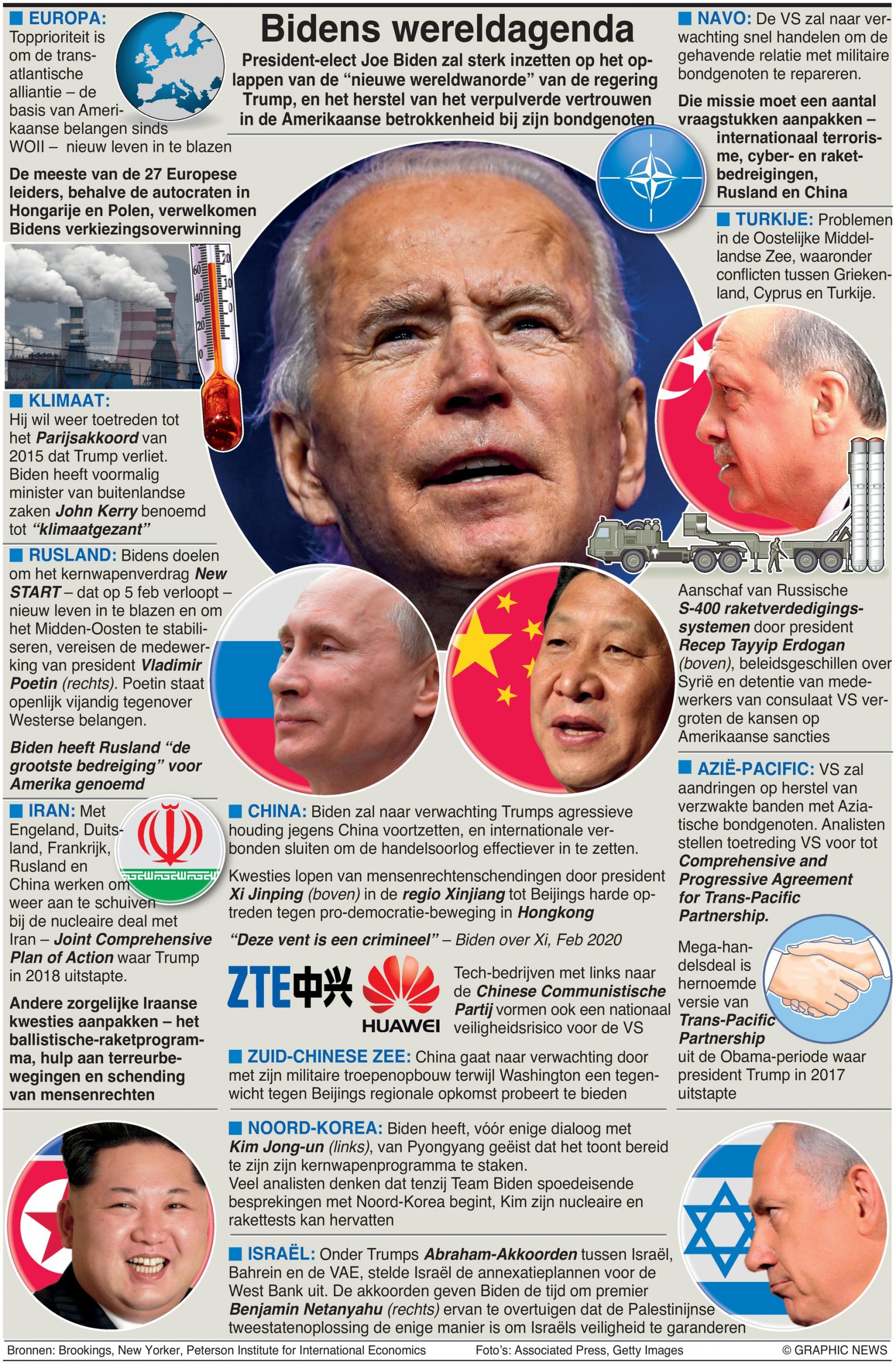
December 19, 2020 – December 5, 2021 – President-elect Joe Biden will focus heavily on patching up a “new world disorder” of the Trump administration, and restoring dashed confidence in U.S. commitments to its allies.
Many of Biden’s goals — reviving the New START arms accord, combating climate change and stabilising the Middle East — all require collaboration with Russia’s President Vladimir Putin. A leader who openly challenges U.S. interests, not only in what he calls Russia’s near-abroad but also in Western Europe, Africa, Latin America and the Arctic.
Biden’s victory also offers a fresh challenge for China, with Washington building an international alliance to wage trade war more effectively.
India, South Asia’s most populous nation will remain a key ally in Washington’s Indo-Pacific strategy. Delhi can counterbalance Beijing’s regional rise.
Biden demands that North Korea show it is willing to abandon its nuclear weapons programme before he holds any meetings with Kim Jong-un. However, many analysts believe that unless Team Biden starts talks with Pyongyang, the days of “fire and fury” may return.
The prospect of the U.S. returning to the Iranian nuclear deal also horrifies Israel and Gulf countries like Saudi Arabia and the UAE.
The one Trump policy Biden could support is the so-called Abraham Accords — the normalisation agreements between Israel, Bahrain and the UAE. These accords require Israel to suspend the building and expansion of settlements and infrastructure in the West Bank heartlands. The suspension buys time for Biden to reaffirm U.S. support for a Palestinian two-state solution as the only way to ensure Israel’s security.